
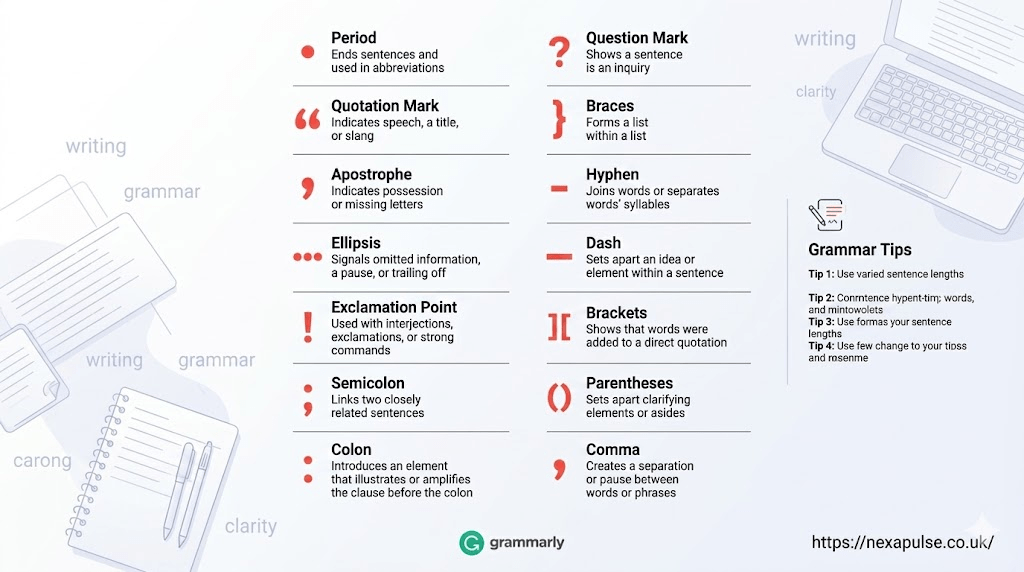
Have you ever stopped while writing and wondered, “when do you put” a comma, apostrophe, quotation mark, or capital letter? You are not alone. Many students, professionals, and even experienced writers ask the same question every day.
Understanding when do you put different punctuation marks and grammar elements can make your writing clearer and more professional. Good writing helps readers understand your message quickly. Whether you are writing an email, school assignment, blog post, or social media update, knowing the correct placement of punctuation is important.
In my experience helping people improve their writing, the biggest challenge is not learning grammar rules. The real challenge is remembering when to use them in everyday situations. This guide breaks everything down into simple steps. You will learn common grammar rules, practical examples, and easy tricks that help you write with confidence.
Table of Contents
Quick Reference Table: When Do You Put Different Grammar Elements?
| Grammar Element | When Do You Put It? | Example |
| Comma (,) | Separate items in a list | Apples, oranges, and bananas |
| Period (.) | End a statement | I like reading. |
| Question Mark (?) | End a question | How are you? |
| Exclamation Mark (!) | Show excitement | Great job! |
| Apostrophe (‘) | Show possession or contractions | Sarah’s book, don’t |
| Quotation Marks (“”) | Show direct speech | “Hello,” she said. |
| Colon (:) | Introduce a list or explanation | Bring: pens, paper, and folders. |
| Semicolon (;) | Connect related ideas | I was tired; I kept working. |
| Capital Letter | Begin sentences and proper nouns | London is beautiful. |
| Parentheses () | Add extra information | The event (held annually) was successful. |
When Do You Put a Comma?
One of the most common grammar questions is when do you put a comma in a sentence. Commas help separate ideas and improve readability. They prevent confusion and allow readers to pause naturally while reading.
You should use a comma when listing three or more items, after introductory phrases, and before certain conjunctions such as “and,” “but,” or “so.” For example, “I bought milk, bread, and eggs.” The comma helps organize information clearly.
Many writers struggle with comma placement because there are several rules. A simple trick is to read your sentence aloud. If a short pause sounds natural, a comma may be needed. However, avoid overusing commas because too many can make writing feel choppy and difficult to follow.
When Do You Put a Period?
A period is one of the easiest punctuation marks to understand. If you are wondering when do you put a period, the answer is simple. Use it at the end of a complete statement.
For example, “The meeting starts at nine.” The sentence shares a complete thought, so it ends with a period. Periods help separate one idea from another and make text easier to read.
Without periods, writing becomes confusing because readers cannot tell where one sentence ends and another begins. Clear sentence boundaries improve comprehension and make your message appear more professional.
When Do You Put a Question Mark?
Many learners ask when do you put a question mark instead of a period. A question mark belongs at the end of a direct question.
Examples include: “What time is it?” and “Where do you live?” These sentences request information and therefore require question marks. The punctuation immediately tells readers that an answer is expected.
A helpful rule is to identify whether the sentence asks something directly. If it does, use a question mark. If it simply reports a question, use a period instead. For example, “She asked where I lived.”
When Do You Put an Apostrophe?
Knowing when do you put an apostrophe can eliminate many common writing mistakes. Apostrophes serve two main purposes: showing possession and forming contractions.
For possession, write “John’s car” to show that the car belongs to John. For contractions, use apostrophes to combine words, such as “don’t” for “do not” or “it’s” for “it is.”
One of the most common mistakes involves confusing “its” and “it’s.” Remember that “it’s” means “it is,” while “its” shows ownership. Learning this simple distinction can instantly improve your grammar accuracy.
When Do You Put Quotation Marks?
Another frequent question is when do you put quotation marks in writing. Quotation marks are used when showing exact words spoken by someone.
For example: “I will call you tomorrow,” said Emma. The quotation marks indicate the exact sentence Emma spoke. Writers also use quotation marks for dialogue in stories and direct citations.
Always place opening quotation marks before the spoken words and closing quotation marks after them. This rule helps readers recognize direct speech immediately.
When Do You Put Capital Letters?
Capitalization is essential for professional writing. If you wonder when do you put capital letters, start with two basic rules: capitalize the first word of every sentence and capitalize proper nouns.
Proper nouns include names of people, places, organizations, and specific events. Examples include Sarah, Paris, and Christmas. Capital letters help identify important names and distinguish them from common nouns.
Consistent capitalization improves readability and demonstrates attention to detail. It also helps readers understand sentence structure more easily.
When Do You Put a Colon?
Writers often ask when do you put a colon in a sentence. A colon introduces a list, explanation, example, or clarification.
For example: “You need three things: patience, effort, and consistency.” The colon signals that additional information is coming next.
A useful tip is to ensure the words before the colon form a complete sentence. If they do, the colon is usually appropriate.
When Do You Put a Semicolon?
The semicolon often confuses writers. Understanding when do you put a semicolon can strengthen your writing style and sentence variety.
A semicolon connects two closely related independent clauses. For example: “The weather was terrible; we still went hiking.”
This punctuation creates a stronger connection than a period but a clearer separation than a comma. It is especially useful in formal writing and academic content.
When Do You Put Parentheses?
Parentheses provide extra details that are helpful but not essential. If you ask when do you put parentheses, think about adding side notes or additional explanations.
For example: “The conference (held every summer) attracts thousands of visitors.” The information inside parentheses adds context without interrupting the main sentence.
Parentheses should be used sparingly. Too many can distract readers and make writing appear cluttered.
When Do You Put Hyphens?
Hyphens connect words that work together as a single idea. If you are unsure when do you put a hyphen, look for compound modifiers.
Examples include “well-known author,” “high-quality product,” and “long-term plan.” The hyphen helps readers understand that the words belong together.
Without hyphens, sentences can sometimes become ambiguous. Proper hyphen usage improves clarity and prevents misunderstandings.
Common Grammar Mistakes to Avoid
Many people know the rules but still make mistakes because they write quickly. Common errors include misplaced commas, incorrect apostrophes, missing capital letters, and overuse of punctuation marks.
One effective strategy is proofreading. After finishing a piece of writing, read it slowly and check every punctuation mark. Focus on sentence endings, commas, and apostrophes first because these mistakes occur most often.
Grammar-checking tools can help, but they should not replace understanding the rules yourself. Learning the basics allows you to catch mistakes that software may miss.
Practical Tips for Better Writing
Improving grammar does not require memorizing hundreds of rules. Start with the most common punctuation marks and practice using them daily. Read books, articles, and professional content to observe how experienced writers structure sentences.
Another helpful method is reading your work aloud. This technique reveals awkward phrasing, missing punctuation, and grammar issues. Over time, correct punctuation becomes a natural habit rather than something you must consciously think about.
The more you write, the easier it becomes to recognize patterns and apply grammar rules automatically.
Why Correct Grammar Matters
Correct grammar improves communication. Readers trust content that is easy to understand and professionally written. Whether you are writing for school, business, or personal projects, grammar helps your message stand out.
Strong grammar also improves credibility. People are more likely to trust information that appears polished and error-free. Even small punctuation improvements can make a significant difference in how readers perceive your writing.
By learning when do you put various punctuation marks and grammar elements, you can write with greater confidence and clarity.
Frequently Asked Questions
1. When do you put a comma before “and”?
You put a comma before “and” when separating items in a list or connecting independent clauses.
2. When do you put an apostrophe in a word?
Use an apostrophe to show possession or create contractions like “can’t” and “don’t.”
3. When do you put quotation marks around text?
Quotation marks are used for direct speech, dialogue, and exact quotations.
4. When do you put a semicolon instead of a comma?
Use a semicolon when connecting two closely related complete sentences.
5. When do you put capital letters in writing?
Capitalize the first word of a sentence and all proper nouns.
6. When do you put a colon in a sentence?
Use a colon before lists, explanations, examples, or clarifications following a complete sentence.
Conclusion
Understanding when do you put punctuation marks and grammar elements correctly is one of the fastest ways to improve your writing. Small details like commas, apostrophes, quotation marks, and capital letters make a big difference in readability and professionalism.
The key is consistent practice. Start by mastering the most common rules and applying them in everyday writing. Read widely, proofread carefully, and pay attention to punctuation in high-quality content. Over time, correct grammar will become second nature.
Whether you are writing emails, essays, blog posts, or social media content, these simple grammar rules will help you communicate clearly and confidently. Keep practicing, and your writing skills will continue to grow.
