
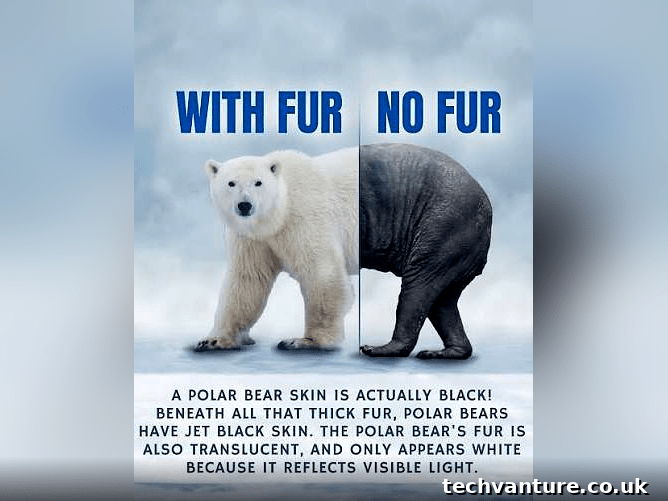
Have you ever looked at a polar bear and just assumed it was white all over? Most people do. It seems like the most obvious thing in the world. These giant animals live in the snowy Arctic. They blend in perfectly with the ice. But what if I told you that everything you think you know about their colour is completely wrong? The real story about colour polar bear skin is one of nature’s best-kept secrets.
It is a fascinating optical illusion. In fact, the truth is a complete flip of what we see with our eyes. The beautiful white coat is not what it seems. And the skin underneath is a shocking colour. Let’s dive into the icy world of these amazing creatures. We will explore the science behind their unique look. You’ll discover the clever tricks of evolution that help them survive. Get ready to have your mind blown by the real colour polar bear skin.
Table of Contents
Why You’ve Been Wrong About Colour Polar Bear Skin
Our eyes can be easily fooled. We see a white bear, so we think it has white skin. This is a very common mistake. In school, we draw polar bears with white bodies. We never question it. But scientists have known the truth for a long time. The colour polar bear skin is a secret hidden under a thick, furry coat. This fur is what creates the white illusion .
It is a classic case of judging a book by its cover. The outside, or the fur, looks one way. But the inside, or the skin, is completely different. This is one of the most amazing facts about these Arctic animals. It shows how nature uses clever tricks to help animals survive in tough places. When you learn the real colour polar bear skin, it changes how you see these majestic creatures forever .
Black is the Answer: The Base Colour of a Polar Bear’s Skin
So, what is the real colour polar bear skin? The answer is black. Yes, black! Just like a black bear, their skin is dark. This is not a random fact. There is a very good reason for it. Imagine wearing a black t-shirt on a sunny day. It gets hot, right? That is the same principle here. The black skin helps the bear stay warm in the freezing Arctic.
The sun’s rays hit the bear. The black colour polar bear skin absorbs the heat from the sunlight. This warmth helps keep the bear cozy. It is a clever survival trick. Underneath all that thick fur, they have a built-in solar panel. This dark colour is a key part of their insulation system. It works together with their fur and fat to fight the extreme cold .
The Science Behind the White Illusion
If the colour polar bear skin is black, why do they look white? The answer lies in their fur. Polar bear fur is not white at all. It is actually clear and hollow. Each hair is like a tiny, empty tube. It has no colour pigment. Think of it like a glass straw. It looks clear on its own. But when you put many together, they look different. The clear hairs scatter light. They reflect the visible light around them.
This scattering of light creates the white colour we see. It is similar to how snow looks white. Snow is just ice crystals, but they reflect all the light. When sunlight hits the clear, hollow hairs, it bounces around. This light, combined with the black colour polar bear skin underneath, creates a bright white appearance. To us, the bear looks white. But it is just a cool trick of the light .
When White Isn’t White: Seeing Yellow or Green
Sometimes, a polar bear doesn’t look pure white. You might see a bear that looks a bit yellow. This is very common. Why does this happen? The yellow colour often comes from their diet. Polar bears eat a lot of seals. Seal blubber is full of oils. These oils can stain the clear fur. So, a yellowish bear is often a well-fed bear! .
There is an even stranger colour change. Sometimes, polar bears can look green. This is usually seen in zoos, not in the wild. The hollow hairs can become a home for algae. These tiny plants grow inside the hair shafts. In warm, wet environments, this can give the fur a green tint. Don’t worry, the bears are fine. A saltwater bath usually gets rid of the algae. The colour polar bear skin stays black, but the fur can change colour .
The Role of Camouflage in the Arctic
Why did nature create this system? It all comes down to survival. The white appearance, created by the black skin and clear fur, is the perfect camouflage. Think about the Arctic landscape. It is a world of snow and ice. A dark brown bear would stand out like a sore thumb. It would be easy for seals to spot it from far away .
But a polar bear looks like a snowdrift. They can blend into the white background. This helps them get very close to their prey. They can sneak up on seals resting on the ice. This is a huge advantage for a predator. The colour polar bear skin and its transparent fur work together to make them invisible. This allows them to be successful hunters. It is a beautiful example of evolution at work .
How Sunlight Interacts with Polar Bear Fur
The interaction of sunlight with the fur is a fascinating process. It is not just about looking white. Some scientists used to think the hairs acted like fibre optics. They thought the hairs funneled sunlight down to the black skin. This would help warm the bear even more. However, recent studies have shown this isn’t the main reason for the white colour .
The primary function is still camouflage. The light-scattering effect is perfect for hiding. The trapped light creates the luminescence we see. The black colour polar bear skin does absorb UV light. This helps with warmth. But the main job of the clear, hollow fur is to make the bear disappear. It creates the stark white camouflage needed for hunting in the snow .
Anatomical Adaptations Beyond Skin Colour
The polar bear’s survival toolkit is impressive. It goes far beyond the colour of its skin and fur. They have two layers of fur. This provides incredible insulation. It traps heat close to their bodies. They also have a thick layer of blubber. This fat can be up to 4.5 inches thick! This acts like a wetsuit when they swim in the freezing water .
They even have fur on the bottoms of their paws. This is a clever feature. It gives them extra grip on the slippery ice. It also keeps their feet warm. The colour polar bear skin on their paws is black too. This helps them absorb heat from the ground. All these adaptations work together. They allow the polar bear to be the undisputed ruler of the Arctic .
A Deeper Look: Insulation and Heat Absorption
Let’s talk more about heat. The Arctic is incredibly cold. Staying warm is a matter of life and death. The combination of black skin and clear fur is a masterpiece of design. The black colour polar bear skin is very good at absorbing heat. It soaks up any warmth from the sun. This is crucial because there is not much sun in winter .
The fur then traps that heat. It stops it from escaping back into the air. The outer guard hairs are long and coarse. They provide a barrier. The inner layer is short and dense. This is the main insulation. This two-layer system is very effective. It is so good that adult polar bears can actually overheat if they run too fast! This shows how well they are built for the cold .
Comparing Polar Bears to Other Bear Species
Polar bears are cousins to brown bears. But they look very different. The most obvious difference is the colour of their coat. Brown bears are, well, brown. Their skin is also light. Their fur has colour pigment. A polar bear’s fur is clear. Their skin is black. These differences are due to their environments .
Brown bears live in forests and mountains. They need to blend into trees and dirt. Polar bears live on ice. Their clear fur and black colour polar bear skin create a white appearance. This is the ultimate Arctic camouflage. Evolution shaped them to survive in their specific habitat. This separation happened over thousands of years. It changed them from brown bears into the white ghosts of the Arctic .
The Evolution of the Polar Bear’s Unique Colour
How did this happen? Polar bears evolved from brown bears. They moved north over generations. The Arctic climate was harsh. It only favored certain traits. Bears with lighter fur had an advantage. They could hunt better because they were harder to see .
Evolution selected for these lighter coats. Over thousands of years, the fur lost its pigment. It became clear and hollow. The skin darkened to absorb more heat. This created the colour polar bear skin and fur we see today. It is a great example of natural selection. The bear that blended in best with the ice got the most food. It lived longer and had more babies. This is how the species adapted to the Arctic .
Fascinating Facts About the Arctic Predator
Polar bears are truly incredible animals. They are the largest land carnivores. An adult male can weigh over 1,500 pounds. They can stand over 10 feet tall on their hind legs. They are powerful swimmers. Their large paws act like paddles. They can swim for days at a time .
They have a very keen sense of smell. They can sniff out a seal from almost a mile away. Their scientific name is Ursus maritimus. This means “sea bear.” It fits them well. They spend most of their lives on the sea ice. The black colour polar bear skin helps them survive this watery world. It lets them absorb any heat they can, even when swimming in the chilly Arctic Ocean .
Why Understanding This Matters for Conservation
Understanding the polar bear is important. It helps us appreciate how amazing they are. But it also helps us see the challenges they face. Climate change is melting the sea ice. This is their main hunting ground. Without ice, they cannot hunt seals. They are losing their habitat fast .
This is why learning about them matters. It shows us how delicate their world is. The colour polar bear skin and fur are perfect for a world of ice and snow. If that ice disappears, their survival is at risk. Scientists are studying their genes. They are trying to see if bears can adapt to warmer temperatures. This offers a small bit of hope. But we still need to protect their Arctic home .
Addressing Common Myths About Polar Bears
There are many myths about polar bears. Let’s clear some up. Some people think they hibernate like other bears. They do not. Only pregnant females dig dens to give birth. The males and non-pregnant females stay active all winter. Another myth is about their colour. Many people still think they are white .
As we have learned, the colour polar bear skin is black. The fur is clear. Their white appearance is an illusion. Some people also think they are left-pawed. This is not true. Scientists have studied their movements. They are just as likely to use their right paw as their left. These facts help us understand the real polar bear, not the myth .
Personal Insights on the Magnificent Polar Bear
Thinking about these bears is always awe-inspiring. It reminds me of how clever nature is. Everything about the polar bear is designed for survival. Every hair, every adaptation has a purpose. The secret of the colour polar bear skin shows us that things are not always what they seem.
It makes you wonder about the world around you. What other secrets are hiding in plain sight? Polar bears are a symbol of the wild. They represent the beauty and the fragility of our planet. By learning about them, we connect with nature. We realize how important it is to protect these incredible animals and their icy home.
Conclusion: The Marvel of Polar Bear Adaptation
The story of the polar bear is a story of survival. It is a tale of clever design and amazing adaptation. The secret of the black colour polar bear skin is just one part of it. It shows how evolution can create the perfect animal for a specific place. From the tips of their clear, hollow hairs to their dark, heat-absorbing skin, they are built for the Arctic.
Next time you see a picture of a polar bear, remember the truth. You are not looking at a white animal. You are looking at a black-skinned animal with transparent fur. You are seeing one of nature’s greatest illusions. It is a powerful reminder that there is always more to discover. The natural world is full of surprises, and the polar bear is one of its most magnificent.
Frequently Asked Questions (FAQs)
1. What is the actual colour of polar bear skin?
The actual colour polar bear skin is black. It is not white. This dark colour helps the bear absorb heat from the sun in the cold Arctic.
2. Why does a polar bear look white if its skin is black?
A polar bear looks white because of its fur. The fur is made of clear, hollow hairs. These hairs scatter and reflect the light around them. This creates a white appearance, even though the colour polar bear skin is black.
3. Can a polar bear’s fur be a different colour?
Yes. The fur can sometimes look yellow or green. A yellow colour often comes from oils in the seal meat they eat. A green colour can happen in zoos when algae grows in the hollow hairs. The colour polar bear skin always stays black.
4. What is the scientific name for the polar bear?
The scientific name for the polar bear is Ursus maritimus, which translates to “sea bear.” This name relates to their life on the Arctic sea ice and highlights their incredible adaptations, including their unique colour polar bear skin.
5. What other adaptations do polar bears have for cold weather?
Besides their black skin and clear fur, they have two layers of fur for insulation and a thick layer of blubber. They also have fur on their paws for extra warmth and grip on the ice.
6. Why is the polar bear’s skin black?
The black colour polar bear skin helps the animal stay warm. The dark colour absorbs the sun’s heat more effectively than light skin would. This helps them survive in the freezing Arctic temperatures.
